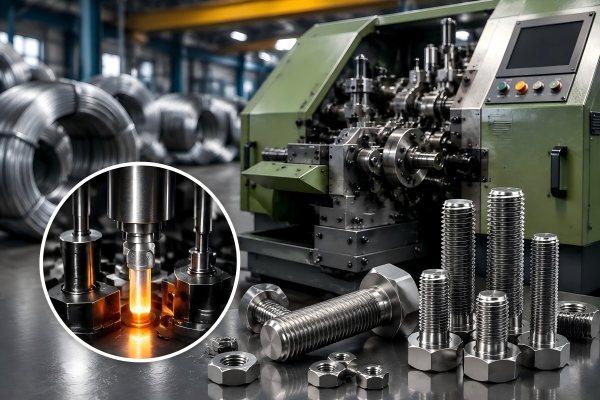
Standard nail production has become one of the most margin-compressed segments in fastener manufacturing. Wire cost, energy cost, and labor cost are largely fixed, and price competition from high-volume producers leaves little room for differentiation. For plant managers evaluating a nail production machine upgrade in 2026, the question is no longer simply "how many pieces per minute"—it is "how do we stop competing on price for products that every plant can make?"
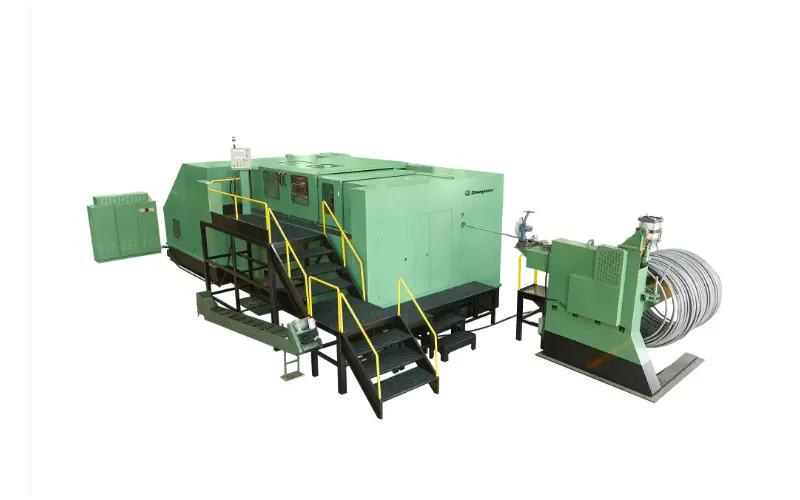
The answer for many manufacturers is product migration: moving from commodity wire nails into specialty industrial nails and nail-like fasteners—threaded shanks, stepped profiles, shoulder features, special bearing heads—that basic nail machines cannot form reliably and that command meaningfully higher margins. This is where a tower bolt making machine platform built around five-stroke progressive forming changes the business case. Instead of producing the same standard nails faster, a five-stroke former expands the product catalog into geometries that are genuinely difficult to copy on conventional equipment—and that customers pay a premium for because the alternative is secondary machining or custom fabrication.
This guide covers how five-stroke progressive forming works, what product categories it unlocks, the specifications that determine whether a machine can handle your target parts, and the TCO model that makes the investment case.
How Five-Stroke Progressive Forming Changes What a Nail Production Machine Can Produce
The capability gap between a standard nail machine and a five-stroke former is not a speed difference—it is a geometric complexity difference. Understanding the forming mechanics explains why certain part features are achievable on one platform and not the other.
Multi-Die Progressive Forming: What Five Strokes Actually Means
In a standard nail machine, wire is fed, cut to length, and formed in one or two hits. The head is formed in a single stroke, and the point is formed at cut-off. This is efficient for simple wire nails, but the single-hit forming constraint means that complex head geometries, diameter transitions, and underhead features cannot be formed without over-stressing the material—which causes cracking, folding, or dimensional instability.
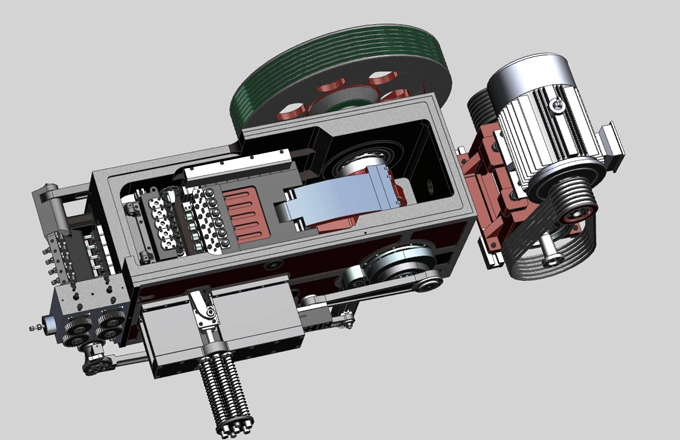
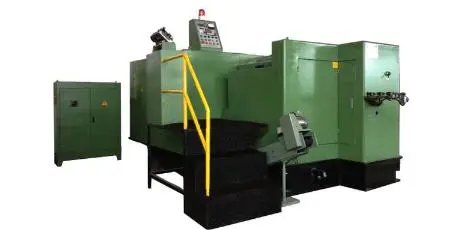
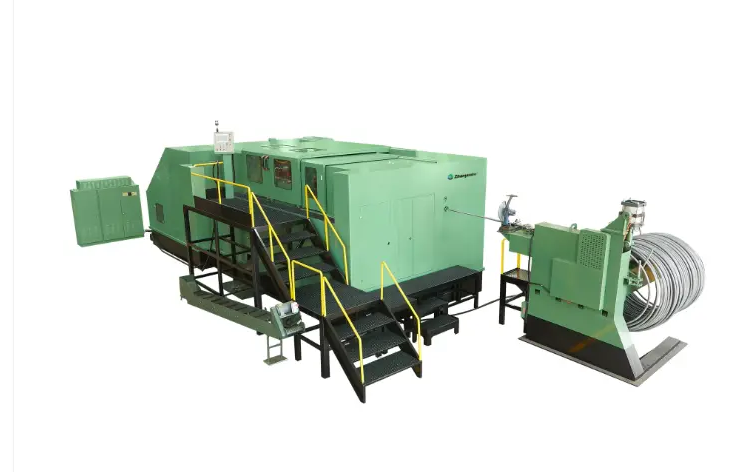
A five-stroke former uses a sequence of five forming stations, each applying a controlled deformation step to the blank as it progresses through the machine. The wire is fed and cut to a precise blank length, then transferred through the die sequence. Each station contributes a defined portion of the total shape change—redistributing material progressively rather than attempting the full geometry in a single hit.
This progressive approach has two critical advantages. First, the forming force at each station is lower than would be required to achieve the same total deformation in one hit, which reduces cracking risk in higher-strength materials and at complex geometry transitions. Second, each station can be optimized for its specific forming task—pre-forming, head development, shoulder formation, underhead geometry—without compromising the other features.
One-Pass Forming: Fewer Operations, Better Economics
The commercial significance of five-stroke progressive forming is that specialty geometries which previously required secondary machining, grinding, or re-forming operations can be produced in a single continuous machine cycle.
Consider a nail-like industrial fastener with a flanged head, a stepped shank, and a defined underhead radius. On a standard nail machine, the head can be formed but the stepped shank and underhead geometry require secondary operations—turning, grinding, or a separate forming step. Each secondary operation adds labor, handling, fixturing, and a defect opportunity. The part cost accumulates across multiple process steps.
On a five-stroke former, the same part is formed in one pass: the five stations progressively develop the head, the flange, the shoulder transition, and the shank geometry in a single machine cycle. The blank exits the machine ready for thread rolling or heat treatment if required—no secondary forming, no machining, no re-handling between forming steps.
The reduction in secondary operations is where the unit cost advantage is most significant, and it is also where the quality advantage is most visible: fewer handling steps mean fewer opportunities for dimensional variation, surface damage, and process-induced defects.
From Commodity Nails to Higher-Margin Products: What Five-Stroke Forming Enables
The product strategy enabled by a five-stroke former is not incremental—it is a category shift. These are the specialty fastener types that become producible when five-stroke progressive forming is available.
Threaded and ribbed nail-like parts
Industrial nails and pins with helical or annular ribs on the shank—designed for improved pull-out resistance in structural applications—require controlled shank geometry that standard nail machines cannot hold consistently. A five-stroke former produces the blank with the required shank profile, which then proceeds to thread rolling or knurling as required by the specification. The combination of precise blank geometry from the former and accurate thread rolling produces a part with consistent pull-out performance that commands a significant premium over smooth-shank wire nails.
Stepped shanks and shoulder features
Fasteners with diameter transitions along the shank—a larger diameter near the head transitioning to a smaller diameter at the point—are used in applications where the fastener must fit through a clearance hole in one material and grip in another. This geometry is impossible to form reliably in a single hit but is straightforward for a five-stroke former, where the diameter transition is developed progressively across two or three stations.
Special bearing heads
Large-flange heads, countersunk heads with specific angle requirements, and heads with underhead features that improve bearing area or prevent rotation all require more forming steps than a standard nail head. Five-stroke forming allows the head geometry to be developed progressively, achieving the required dimensions and surface quality without the cracking or folding that occurs when complex head geometry is attempted in a single hit.
Combination features
The highest-margin specialty fasteners combine multiple features—a flanged head, a shoulder transition, a defined underhead radius, and a specific shank profile—that individually might be achievable on simpler equipment but cannot be combined reliably without progressive forming. These combination-feature parts are the most difficult to copy on standard equipment and therefore command the most durable price premium.
Selecting the Right Five-Stroke Configuration: The Specification Checklist
A five-stroke former that is correctly specified for the target part range will deliver its rated performance. One that is under-specified for the material or geometry will produce defects, accelerate tooling wear, and fail to achieve the one-pass forming objective.
Forming range: wire diameter, cut length, and head envelope
Confirm that the machine's wire diameter range covers the full range of parts in the target product catalog—not just the most common specification. Maximum cut-off length determines the longest blank that can be formed, which sets the maximum bolt or nail length achievable. Maximum head diameter and height define the largest head geometry the machine can produce. Parts that exceed any of these limits require a different machine configuration.
Material capability
Carbon steel, alloy steel, and stainless steel each have different cold-forming characteristics. Higher tensile strength materials require higher forming force and accelerate die wear. Stainless steel has a higher work-hardening rate than carbon steel, which affects the forming force required at each station and the lubrication requirements. Confirm material-specific capability with the machine supplier using the actual tensile strength of the wire grade you intend to use, not a generic material category.
Station and die layout matched to forming steps
The five stations must be configured to match the specific forming sequence required for the target part geometry. A machine with five stations configured for a different forming sequence than your part requires may not be able to produce your target geometry without tooling redesign. Provide part drawings to the machine supplier and confirm that the station layout can be configured for your specific forming steps.
Forming force and stroke stability
Forming force determines whether the machine can develop the required head geometry and shank features in the target material without cracking or folding. Stroke stability—the consistency of the ram position at bottom dead center—determines dimensional consistency across a production run. Request stroke stability specifications and confirm that the machine's structural rigidity is adequate for the forming force required by your most demanding part specification.
Feeding and cut-off accuracy
Blank length tolerance directly affects head concentricity and dimensional consistency of the formed part. Cut-off accuracy depends on the feeding system's ability to deliver consistent wire length at production speed. Request feeding accuracy specifications and confirm that they are adequate for the dimensional tolerances required by your target parts.
Automation and protection systems
Misfeed detection, overload protection, and part discharge control affect OEE in real production. A machine that stops frequently for misfeed correction or die protection events has lower effective output than the rated speed suggests. Confirm the sensor and protection system specification before ordering.
For plants evaluating whether five-stroke complexity is required for their specific product range, or whether a simpler configuration is sufficient, the three-die three-blow bolt forming machine is a relevant comparison point for less complex geometries:
Where Five-Stroke Forming Delivers the Best Return—Applications and Order Profiles
The ROI advantage of five-stroke forming is most significant in specific production scenarios. These are the applications where the combination of higher margin and lower secondary operation cost produces the strongest business case.
Industrial construction fasteners
Structural nails and pins with special heads or shoulder features for improved holding performance in engineered wood, concrete, or composite substrates are a growing market segment where dimensional consistency and pull-out performance are specified and verified. These parts command a significant premium over commodity wire nails and are difficult to produce consistently on standard nail machines. Five-stroke forming produces them in one pass with the dimensional stability required for structural applications.
Automotive and industrial component supply
Nail-like pins, rivet-style parts, and special formed blanks for automotive and industrial assembly applications require tight dimensional tolerances and consistent mechanical properties. These are typically medium-to-high volume parts with stable specifications—the ideal profile for five-stroke forming, where tooling investment is amortized over long production runs and the one-pass forming advantage reduces unit cost significantly compared to multi-step processes.
Export and OEM supply
OEM customers and export buyers who specify fasteners by drawing rather than by catalog number value repeatability and dimensional control above all else. Five-stroke progressive forming's inherent dimensional stability—consistent forming force, stable stroke, precise cut-off—produces parts that meet drawing tolerances consistently across production batches, which is the foundation of a reliable OEM supply relationship.
Medium-to-high volume specialty runs
The five-stroke former's tooling investment is most efficiently amortized over medium-to-high volume production runs. Short-run custom parts are better suited to machining or flexible forming platforms. The sweet spot is specialty parts with stable specifications and annual volumes high enough to justify dedicated tooling—typically above 200,000–500,000 pieces per year per specification, depending on part complexity and tooling cost.
Installation, Tooling, and Changeover: Running a Five-Stroke Line Profitably
Installation Readiness
Power supply specification must match the machine's electrical requirements—voltage, phase, and amperage. Compressed air supply must meet the specified pressure and flow rate for pneumatic systems. Floor loading and foundation requirements should be confirmed before installation planning begins—five-stroke formers generate significant dynamic loads during operation, and inadequate foundation preparation causes vibration that affects dimensional consistency and accelerates wear.
Wire pay-off and straightening equipment must be matched to the wire diameter range and coil size used in production. Lubrication systems—wire lubricant and die lubricant—must be installed and commissioned before production begins. Safety guarding for the forming area, wire feeding zone, and part discharge must meet applicable machinery safety standards.
Tooling Plan: The Real Profit Lever
Die and punch material selection is the most consequential tooling decision. Carbide tooling provides longer life for abrasive materials and high-volume production but requires careful handling and has higher initial cost. Tool steel alternatives are appropriate for lower-volume runs or softer materials where carbide's cost premium is not justified by the life improvement.
A spare tooling package—maintaining a defined inventory of critical dies and punches for each active part specification—prevents production stoppages from unexpected tooling failure. The spare tooling investment is typically small relative to the cost of unplanned downtime on a high-volume specialty part.
First-article approval for new specialty parts should include dimensional measurement, surface defect inspection, and concentricity verification before production release. This process catches tooling setup errors before they produce a full batch of non-conforming parts.
Changeover Strategy
Grouping SKUs by similar tooling families—parts that share common die holder dimensions or forming sequences—reduces changeover time and tooling inventory. Standardizing common punches across multiple part specifications simplifies the spare parts plan. Batch size planning should account for changeover time in the OEE calculation—very short batches on a complex tooling setup will reduce effective output significantly.
Maintenance and TCO: Why One-Pass Forming Lowers Unit Cost at Scale
The unit cost advantage of five-stroke one-pass forming over multi-step processes is most clearly demonstrated through a complete TCO comparison that includes secondary operation costs.
Fewer secondary steps reduce labor and defect opportunities
Each secondary operation—machining, grinding, re-forming, re-handling—adds labor cost, fixturing cost, and a defect opportunity. A part that requires three process steps has three opportunities for dimensional error, surface damage, and handling-induced defects. A part produced in one pass on a five-stroke former has one. The reduction in defect opportunities is a quality benefit as well as a cost benefit—it reduces scrap rate and rework labor simultaneously.
Scrap control through progressive forming
Attempting complex geometry in too few hits—as occurs on under-specified equipment—causes cracking, folding, and surface defects that generate scrap. Progressive forming distributes the total deformation across five stations, keeping the strain at each station within the material's formability limit. This reduces crack risk and produces more consistent surface quality, which directly reduces scrap rate on complex parts.
TCO model
The relevant comparison for a five-stroke investment is:
(Current process cost per part including secondary operations) vs. (Five-stroke one-pass cost per part)
Current process cost includes: forming cost on existing equipment + secondary machining or re-forming cost + handling and fixturing between steps + scrap and rework cost across all steps.
Five-stroke one-pass cost includes: forming cost on the five-stroke former + tooling cost per piece + any remaining downstream operations (thread rolling, heat treatment) + scrap cost at the reduced rate achievable with progressive forming.
The difference between these two figures, multiplied by annual production volume, gives the annual cost saving. Divided into the machine investment cost, it gives the payback period. For specialty parts with significant secondary operation cost in the current process, payback periods of 18–30 months are achievable at medium-to-high production volumes.
Conclusion
When commodity nail production offers thin margins and intense price competition, the most direct path to higher profitability is expanding into specialty products that basic nail machines cannot make consistently. A five-stroke former uses progressive, multi-die forming to produce complex nail-like fasteners and industrial parts—often in one pass, with fewer secondary operations, better dimensional stability, and lower unit cost at scale than multi-step alternatives.
The right machine selection depends on confirming that the forming range, material capability, and station layout match the specific part drawings and material grades in the target product catalog. With the correct configuration and tooling plan, a five-stroke former transforms a nail production line from a commodity volume operation into a specialty fastener capability that competes on value rather than price.
Get a Recommended Machine Configuration and Quotation
Ready to model the unit cost for your specialty nail and fastener specifications? Submit your requirements for an accurate machine configuration recommendation and quotation.
View the Five-Stroke Bolt Parts Former
To receive a specific recommendation, provide the following:
Work conditions: Current products and process steps, shifts per day, target annual output, available utilities (power supply, compressed air, floor space)
Quantity: Number of machines or lines needed, capacity target per line, required delivery timeline
Size and specifications: Part drawings and tolerances, wire diameter range, cut length, head type and dimensions, special features required (threaded shank, stepped profile, shoulder, underhead geometry), material grade and tensile strength
Target metrics: Stable output in pieces per minute, scrap rate target, one-pass forming goal, tooling life and OEE targets, cost-per-piece target
Current problem: Low margin on current products, too many secondary operations, unstable dimensional quality, high scrap rate, frequent tool breakage, inability to form complex geometries on existing equipment
FAQ
1. What is a nail production machine in the context of specialty formed nails and parts?
A nail production machine is equipment that forms nail or nail-like fasteners from wire or rod stock. Standard nail machines form simple wire nails in one or two hits—efficient for commodity products but limited in the geometric complexity they can achieve. For specialty industrial nails and nail-like fasteners with complex heads, stepped shanks, shoulder features, or combination geometries, manufacturers use multi-station progressive formers—such as five-stroke formers—that develop the part geometry across multiple sequential forming steps, enabling shapes and features that single-hit or two-hit machines cannot produce reliably.
2. How does a five-stroke former compare with a three-die three-blow bolt forming machine?
A three-die three-blow machine is appropriate for simpler bolt and fastener blank geometries where three forming steps are sufficient to develop the required head and shank features. It is a capable and cost-effective platform for standard hex head bolts and similar parts. A five-stroke former adds two additional forming stations, enabling more complex progressive geometry development—stepped shanks, combination head features, shoulder transitions, and underhead geometry that require more forming steps than a three-station machine can provide. The five-stroke platform is the appropriate choice when the target part catalog includes specialty geometries that cannot be formed reliably in three hits, or when one-pass forming of complex parts is required to eliminate secondary machining operations.
3. What ROI or payback period can a five-stroke machine deliver?
ROI comes from two primary sources: margin improvement from moving into higher-value specialty products that command a price premium over commodity nails, and unit cost reduction from eliminating secondary machining and re-forming operations on complex parts. The payback period depends on the margin difference between current and target products, the secondary operation cost eliminated by one-pass forming, and the annual production volume of specialty parts. For plants with significant secondary operation cost in their current process and medium-to-high volume specialty part requirements, payback periods of 18–30 months are achievable.
4. Do we need to modify our factory to install a five-stroke tower bolt making machine?
Standard industrial installation preparation is required: stable power supply matched to the machine's electrical specification, compressed air at the required pressure and flow rate, adequate floor space and foundation preparation for the machine's dynamic load, wire pay-off and straightening equipment matched to the wire diameter range, lubrication supply systems, and safety guarding for the forming and feeding areas. Downstream equipment coordination—thread rolling, heat treatment, inspection—must also be planned based on the specific parts to be produced. These are standard requirements that do not typically require structural building modifications but must be planned and completed before installation.
5. What parameters should we provide for correct machine selection and an accurate quotation?
Provide: part drawings and dimensional tolerances for the target specialty parts, wire diameter range and material grade with tensile strength, finished part dimensions (head type and geometry, shank diameter and length, any stepped or shoulder features), required forming steps and features (threaded shank, stepped profile, shoulder, underhead geometry), target output in pieces per minute and annual volume, current process route including all secondary operations, current scrap and quality issues, and target cost-per-piece or margin improvement goals. The more specific the part drawings and material specifications, the more accurate the machine configuration recommendation and tooling feasibility assessment will be.

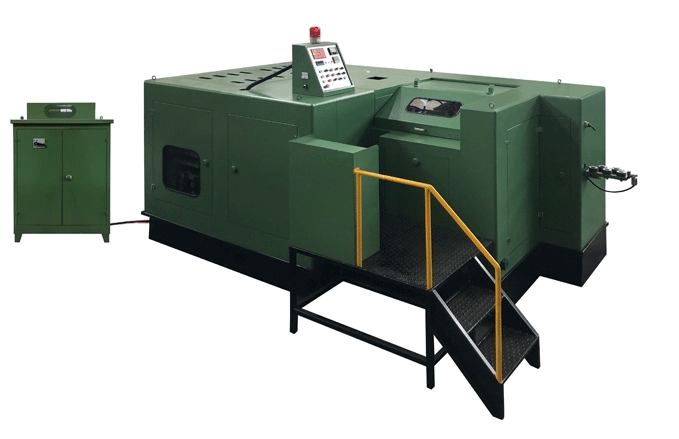
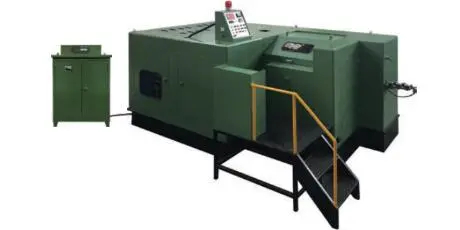
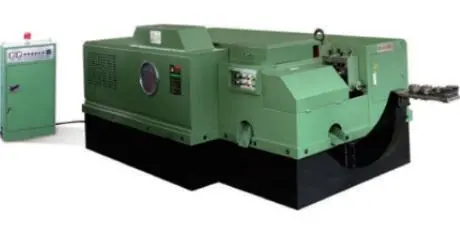
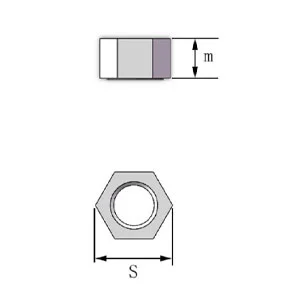 Bolt Cold Heading MachineThe bolt cold heading machine can meet various bolt requirements. It can produce cold-headed bolts with a head width across flats (S) of 9-58mm, a tail diameter (d) of 6-38mm, and a total length (S+L) of 6-500mm, at a production speed of 50-300 pieces per minute.
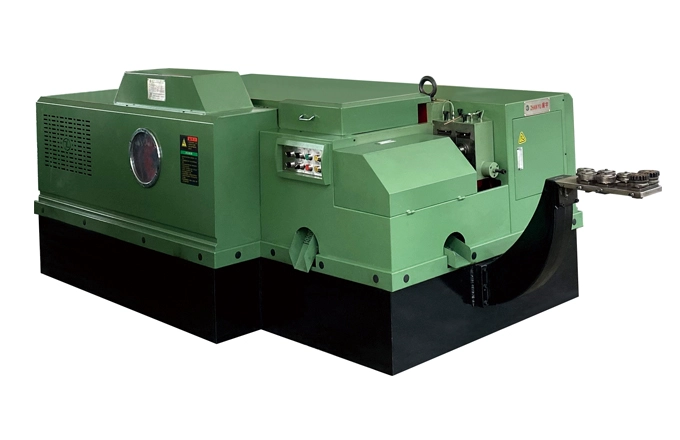
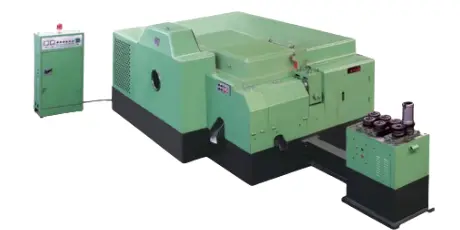
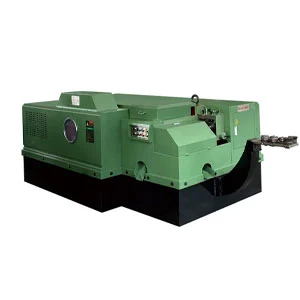
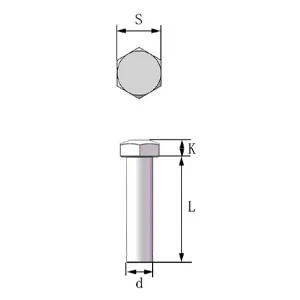 Parts FormerParts former can meet the requirements for various non-ferrous metal products suitable for cold heading. The maximum outer diameter (S) of the products can reach 8-70mm, and the length (H) can reach 8-500mm, with a production speed of 50-300 pieces per minute.
(1).webp "Parts Former")

 English