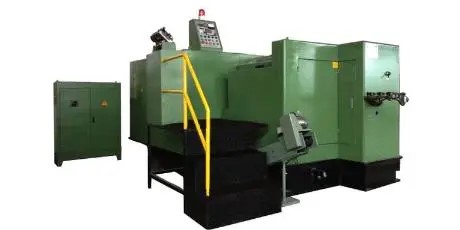
When procurement managers and plant engineers evaluate a new nut bolt making machine, the brochure speed is rarely the deciding question. The real uncertainty is more specific: can a cold heading process actually handle our material grade and bolt geometry, and once energy cost, scrap rate, tooling life, and labor are counted honestly, does it deliver a better cost-per-piece than the hot forging line we already know?
For plants comparing a bolt heading machine against existing forging or machining operations, the decision requires more than a capability claim—it requires a verified forming envelope for the target material and a realistic unit cost model at the actual production volume.
This guide covers the process science behind cold heading, the three cost advantages that drive ROI at scale, the specifications that determine whether a machine can handle your parts, and the TCO framework for building a defensible payback calculation.
Cold Heading vs. Hot Forging: How a Bolt Heading Machine Actually Forms Fasteners
The process difference between cold heading and hot forging is not just a temperature variable—it changes the energy input, the material behavior, the downstream finishing requirements, and ultimately the cost structure of every part produced.
Cold Heading: Room-Temperature Forming
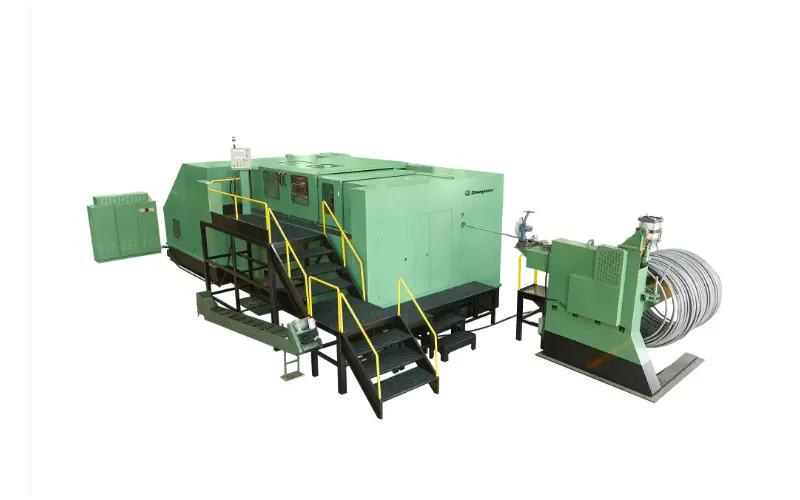
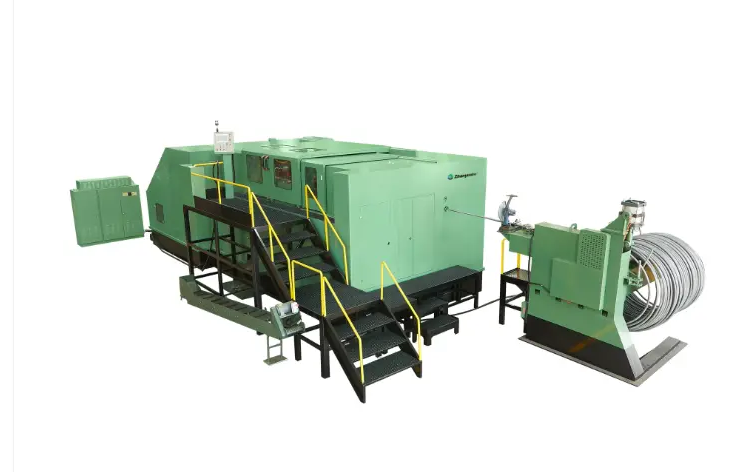
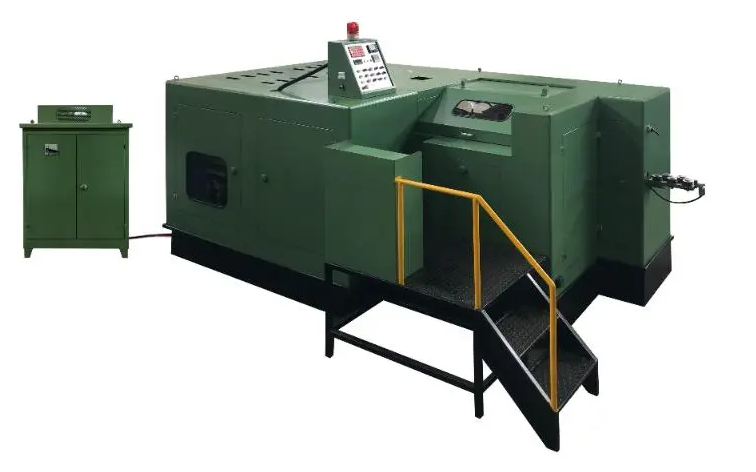
In cold heading, wire rod is fed from a coil, cut to a precise blank length, and formed under high compressive force at room temperature. A multi-station bolt heading machine progressively shapes the blank through a sequence of die and punch stations—typically two to six stations depending on head geometry complexity—forming the bolt head, shank geometry, and any underhead features without heating the material at any point in the process.
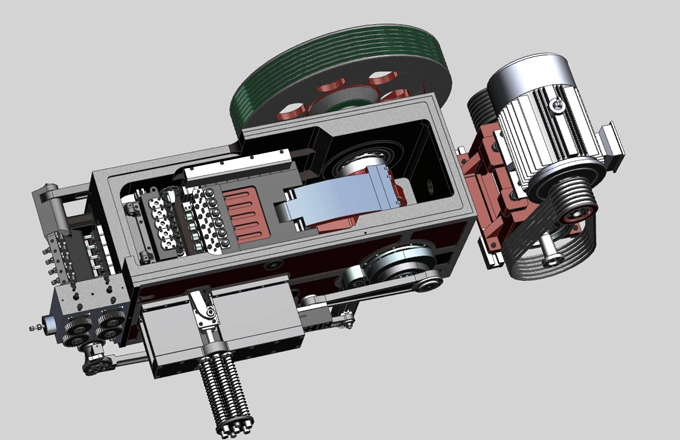
The forming force required is higher than in hot forging because the material is not softened by heat. This is why machine tonnage and punch stroke stability are critical specifications—the machine must maintain consistent forming force across the full production run without deflection that would cause dimensional variation or premature die failure.
After cold heading, bolt blanks typically proceed to thread rolling—a separate cold-forming operation that produces threads with better surface finish and fatigue resistance than cut threads—and heat treatment if the finished bolt specification requires it.
Hot Forging: Heated Forming
In hot forging, the wire or bar stock is heated to a temperature that reduces the material's yield strength and makes it more plastic and easier to form. The reduced forming force requirement allows larger cross-sections and more complex geometries to be formed with lower machine tonnage.
The trade-offs are significant. Furnace energy cost is continuous and substantial. Scale and oxidation form on the heated surface, requiring descaling operations before or after forming. Handling hot material introduces safety requirements and slows cycle time. The heated surface also affects dimensional consistency—thermal expansion during forming and contraction during cooling introduce variability that cold heading avoids entirely.
Why the process choice determines the ROI outcome
The energy input, cycle time, scrap rate, surface condition, and downstream finishing requirements all change with the forming method. For high-volume standard bolt production where the geometry and material are within cold-forming capability, the cost structure of cold heading is fundamentally different from hot forging—and the difference compounds with volume.
For a detailed technical overview of cold heading in fastener production, this reference covers the process in depth:
Three Reasons Cold Heading Wins on Unit Cost at Scale
The ROI advantage of cold heading over hot forging for high-volume bolt production comes from three compounding cost factors. Each one is meaningful individually; together they create a cost-per-piece gap that widens with production volume.
No heating means major energy savings
Hot forging requires continuous furnace operation to maintain forming temperature. Furnace energy—whether gas or electric—is a fixed cost that runs whether the press is forming parts or not, and a variable cost that scales with throughput. In a high-volume fastener plant running multiple shifts, furnace energy is one of the largest operating cost line items.
Cold heading eliminates this cost entirely. The bolt heading machine draws electrical power for the forming press and wire feeding system, but there is no furnace, no preheating infrastructure, and no energy cost associated with bringing material to forming temperature. In markets where energy cost is high or volatile, this difference is a significant and durable competitive advantage.
The infrastructure savings extend beyond the energy bill. Hot forging requires furnace installation, maintenance, and safety systems—ventilation, heat shielding, handling equipment for hot material. Cold heading eliminates this infrastructure requirement, reducing both capital cost and ongoing facility operating cost.
Near-zero material waste from precise wire forming
In cold heading, the blank length is cut from wire rod to a precise dimension before forming. The forming process redistributes material—moving it from the shank into the head—without removing any material. There is no machining, no trimming of flash, and no scale loss. Material utilization in cold heading is typically 95–99% of the input wire weight, depending on the bolt geometry and any minor trimming operations required.
Hot forging generates scale loss from oxidation of the heated surface, flash from the forging die parting line, and trimming waste from flash removal. Machining-based processes generate chip waste that can represent 20–40% of input material weight for complex geometries.
At high production volumes, the material utilization difference between cold heading and alternative processes translates directly into raw material cost savings. For a plant producing 10 million bolts per year, a 5% improvement in material utilization represents a substantial annual saving in wire rod cost—often enough to justify the machine investment independently of the energy savings.
Higher finished strength from cold working
Cold forming work-hardens the material as it is deformed. The plastic deformation increases dislocation density in the metal's crystal structure, which raises yield strength and tensile strength above the annealed wire rod values. This work hardening effect is a genuine mechanical benefit—cold-headed bolt blanks often have better mechanical properties than the same geometry produced by machining from bar stock, where the grain flow is cut rather than redirected.
The favorable grain flow in cold-headed parts—where the grain follows the contour of the formed geometry rather than being cut across—also improves fatigue resistance, which is relevant for bolts in dynamic loading applications such as automotive and industrial machinery.
For plants currently producing bolts by machining, the combination of near-zero waste and improved mechanical properties from cold heading represents a double benefit: lower material cost and better part performance from the same input material.
What to Specify on a Nut Bolt Making Machine RFQ
Capability claims in machine brochures are typically stated at optimal conditions. The specifications that determine whether a machine can actually handle your material and geometry at stable production rates are more specific—and more important to verify before ordering.
Material range and grade compatibility
Wire diameter range and tensile strength range are the primary material capability parameters. Cold heading is feasible for carbon steel, alloy steel, and stainless steel within defined tensile strength limits—higher-strength materials require higher forming force and accelerate die wear. Confirm that the machine's rated forming force is adequate for your target material grade at the maximum diameter in your product range, not just at the minimum.
Stainless steel and certain alloy grades have specific cold-forming characteristics—work hardening rate, galling tendency, and lubrication requirements—that affect tooling life and surface quality. Confirm material-specific capability with the machine supplier before finalizing the specification.
Maximum cut-off length and forming envelope
Bolt length, head diameter, head height, and any underhead geometry define the forming envelope. Confirm that the machine's cut-off length range and station geometry can accommodate the longest and most complex parts in your product range. A machine that handles your standard product but cannot form your highest-volume SKU is not the right specification.
Number of stations and die layout
More forming stations allow more progressive shape development, which enables more complex head geometries and reduces the forming force required at each station. A two-station machine is appropriate for simple hex head bolts from soft materials. A four- or six-station machine is required for complex heads, flanged geometries, or higher-strength materials where progressive forming is necessary to avoid cracking.
Main forming force and punch stroke stability
Forming force determines the maximum material cross-section and tensile strength the machine can handle. Punch stroke stability—the consistency of the ram position at bottom dead center across millions of cycles—determines dimensional consistency and die life. Ask for stroke stability specifications and confirm that the machine's structural rigidity is adequate for your target material and diameter.
Stable production speed, not peak speed
Peak speed under ideal conditions is a marketing number. The relevant metric is stable output speed under your target specification with realistic tool life and feeding stability. Request production data at your target wire diameter and material grade, not at the machine's rated maximum.
Automation and quality control integration
Wire feeding control, misfeed detection, part counting, and sensor systems for die protection affect OEE (Overall Equipment Effectiveness) in real production. A machine that runs at high speed but stops frequently for misfeed correction or die damage has lower effective output than a slower machine with better feeding stability and protection systems.
Where Cold Heading Cuts Unit Cost the Most—Best-Fit Applications
The ROI advantage of cold heading is not uniform across all fastener types and production scenarios. These are the applications where the cost-per-piece advantage is most significant.
High-volume standard bolts
Hex head bolts, flange bolts, carriage bolts, and similar standard geometries in carbon and alloy steel are the core application for cold heading. High production volumes, stable tooling life, and predictable material behavior make the cost model highly favorable. The combination of no heating energy, near-zero scrap, and high throughput produces the lowest achievable cost-per-piece for these products.
Automotive and industrial fasteners
Automotive fasteners require consistent mechanical properties, tight dimensional tolerances, and documented process control. Cold heading's work hardening effect and favorable grain flow contribute to consistent mechanical performance, and the process is inherently more dimensionally stable than hot forging because there is no thermal expansion variability. For plants supplying automotive tier suppliers or OEMs, cold heading's process consistency is a quality advantage as well as a cost advantage.
Export-oriented fastener plants
In competitive export markets, cost-per-piece is the primary competitive variable. Cold heading's energy and material efficiency advantages translate directly into lower production cost, which supports competitive pricing without margin compression. Plants competing on price in international markets benefit most from the compounding cost advantages of cold heading at high volume.
When hot forging remains the right choice
Very large fastener dimensions—typically above M30 or equivalent—may exceed the practical forming force limits of cold heading equipment. Certain geometries with extreme head-to-shank ratios or complex underhead features may require hot forging for feasibility. Some high-alloy materials with limited cold formability are better suited to hot forging. The correct approach is to confirm feasibility with part drawings and material specifications before assuming cold heading is applicable to every product in the range.
Installation, Tooling, and Changeover: Setting Up for Reliable Output
A cold heading line that is correctly installed and tooled will deliver its rated performance. One that is installed without adequate preparation will underperform from day one and generate maintenance problems that obscure the true capability of the equipment.
Factory preparation before installation
Power supply specification—voltage, phase, and amperage—must match the machine's electrical requirements. Compressed air supply for pneumatic systems must meet the specified pressure and flow rate. Floor loading and foundation requirements should be confirmed with the machine supplier before installation planning begins—cold heading machines generate significant dynamic loads during operation, and inadequate foundation preparation causes vibration that affects dimensional consistency and accelerates wear.
Wire pay-off area must accommodate the coil size used in production. Lubricant supply and application systems—wire drawing lubricant and die lubricant—must be planned and installed before production begins. Safety guarding for the forming area and wire feeding zone must meet local machinery safety standards.
Tooling strategy
Die and punch material selection depends on the material being formed and the head geometry. Carbide tooling provides longer life for abrasive materials and high-volume production but has higher initial cost and requires more careful handling than tool steel alternatives. A spare tooling plan—maintaining a defined inventory of critical dies and punches—prevents production stoppages from unexpected tooling failure.
Expected tooling life varies significantly with material hardness, head geometry, and lubrication quality. Request tooling life data from the machine supplier for your specific material grade and geometry before finalizing the tooling cost element of your TCO model.
Changeover planning
Batch size and product mix determine how frequently the machine must be changed over between bolt specifications. Quick-change tooling systems reduce changeover time for plants with high product variety. Standardizing tooling across common bolt families—using the same die holder dimensions for multiple head sizes—reduces the tooling inventory required and simplifies changeover procedures.
Building a Real TCO Model: Maintenance and Cost-Per-Piece Calculation
The payback calculation for a cold heading investment is straightforward once all cost elements are included. The most common error is comparing machine purchase price against current process cost without accounting for the full operating cost difference.
Maintenance drivers and cost
Punch and die wear is the primary maintenance cost in cold heading. Wear rate depends on material hardness, forming force, lubrication quality, and the geometry of the formed feature. Lubrication management—maintaining correct lubricant type, concentration, and application—is the single most controllable variable affecting tooling life. Feeding system upkeep, alignment checks, and periodic inspection of the ram and die block are routine maintenance items that prevent the progressive degradation that causes dimensional drift and increased scrap.
TCO elements to calculate
| Cost element | Cold heading | Hot forging |
|---|
| Energy per 1,000 pcs | Press electricity only | Press + furnace fuel/electricity |
| Material utilization | 95–99% | Lower due to scale and flash |
| Tooling cost per 1,000 pcs | Depends on material/geometry | Die wear + scale effects |
| Labor per shift | Lower (higher automation potential) | Higher (handling, safety) |
| Downstream processing | Thread rolling, heat treatment if required | Descaling + thread rolling + heat treatment |
| Surface finish | Clean, consistent | Scale removal required |
How to calculate payback
The payback calculation compares cost-per-piece at target annual volume between the current process and cold heading. The inputs are:
Energy cost per piece: furnace energy eliminated; press energy per piece at target throughput
Material cost per piece: wire rod cost × (1 − utilization rate); compare to current scrap rate
Tooling cost per piece: tooling cost ÷ tooling life in pieces
Labor cost per piece: labor per shift ÷ pieces per shift
Downstream cost difference: any reduction in descaling, surface finishing, or secondary operations
Sum these elements for both processes at your target annual volume. The annual cost saving divided into the machine investment cost gives the payback period. For high-volume SKUs—typically above 500,000 pieces per year per bolt specification—the payback period for a correctly specified cold heading line is often under two years when energy and material savings are both captured.
Conclusion
For high-volume bolt production, cold heading is the most direct path to lower cost-per-piece: no furnace energy, near-zero material waste, and stronger finished parts from cold working. The three cost advantages compound with volume—the more parts produced, the larger the annual saving from each element. The right decision, however, depends on confirming that your material grade and bolt geometry are within cold-forming capability, and on building a TCO model that includes tooling life and OEE realistically rather than at peak conditions.
With the correct machine configuration, tooling plan, and installation preparation, a cold heading bolt heading machine delivers a measurable and durable ROI advantage over hot forging for large-scale fastener output—and the payback is typically fastest at the highest-volume SKUs in the product range.
Get a Recommended Machine Configuration and Quotation
Ready to model the cost-per-piece for your bolt specifications and annual volume? Submit your requirements for an accurate machine configuration recommendation and quotation.
View the Bolt Cold Heading Machine
To receive a specific recommendation, provide the following:
Work conditions: Current process (forging, machining, or existing cold heading), shifts per day, target annual output, available utilities (power supply, compressed air, floor space)
Quantity: Number of machines needed, target capacity per line, required delivery timeline
Size and specifications: Bolt and nut drawings, diameter and length range, head type and geometry, dimensional tolerances, material grade and tensile strength, wire diameter
Target metrics: Stable output in pieces per minute, scrap rate target, tooling life target, OEE target, energy reduction goal versus current process
Current problem: Material too hard for current equipment, high energy cost from furnace operation, high scrap rate, low uptime, frequent die failure, dimensional inconsistency
FAQ
1. What is a nut bolt making machine?
A nut bolt making machine is equipment that forms fastener blanks—bolts, nuts, or both depending on the line configuration—through cold heading or related cold-forming processes. In a typical bolt production line, the cold heading machine forms the bolt blank (head and shank geometry) from wire rod, which then proceeds to thread rolling to form the thread profile, and heat treatment if the finished bolt specification requires it. The term covers a range of machine configurations from simple two-station headers for basic hex bolts to multi-station progressive formers for complex fastener geometries.
2. How does cold heading compare with hot forging and machining for bolt production?
Cold heading is typically the best choice for high-volume bolt production where the geometry and material are within cold-forming capability. It maximizes material utilization, eliminates furnace energy cost, and produces parts with favorable grain flow and work-hardened mechanical properties. Hot forging handles larger cross-sections and some geometries that exceed cold-forming limits, but adds heating energy cost, scale loss, and downstream descaling requirements. Machining offers the greatest geometric flexibility but generates significant chip waste—often 20–40% of input material—and has slower unit economics than cold heading at high volumes. The correct process choice depends on part size, material, geometry complexity, and annual production volume.
3. What ROI or payback period can a bolt heading machine deliver?
ROI comes primarily from three sources: elimination of furnace energy cost, improved material utilization reducing raw material spend, and higher throughput with lower labor per piece. The payback period depends on annual production volume, current process cost, and the specific energy and material savings achievable for the target bolt specifications. For high-volume SKUs—typically above 500,000 pieces per year per specification—payback periods of 18–36 months are achievable when energy and material savings are both captured in the model. The payback is fastest at the highest-volume, most material-intensive parts in the product range.
4. Do we need to modify our factory to install a cold heading line?
Yes, at the operational preparation level. The primary requirements are: stable power supply matched to the machine's electrical specification, compressed air supply at the required pressure and flow rate, adequate floor space and foundation preparation for the machine's dynamic load, wire pay-off area for coil handling, lubricant supply and application systems, and safety guarding for the forming and feeding areas. These are standard industrial installation requirements that do not typically require structural building modifications, but they must be planned and completed before installation to avoid delays and performance problems after commissioning.
5. What parameters should we provide for correct machine selection and an accurate quotation?
Provide: part drawings for the bolt specifications to be produced, material grade and tensile strength for each specification, wire diameter, finished bolt dimensions (diameter, length, head type and geometry), dimensional tolerances, target output in pieces per minute and annual volume, number of forming stations required, existing process and current pain points (high energy cost, scrap rate, die failure frequency, dimensional inconsistency), utility constraints (power supply specification, available floor space), and delivery timeline requirements.

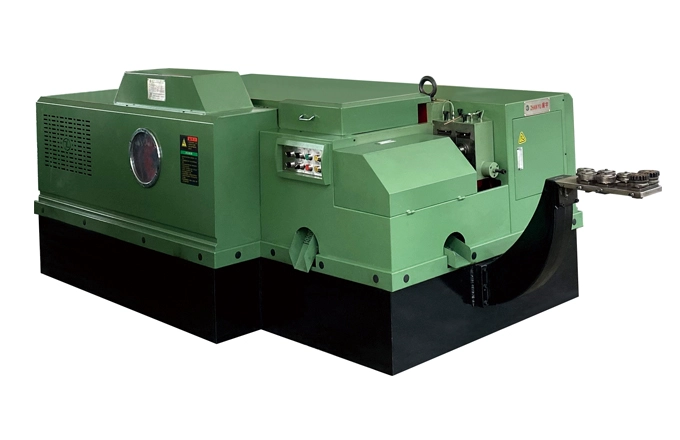
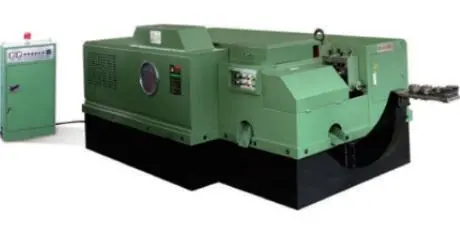
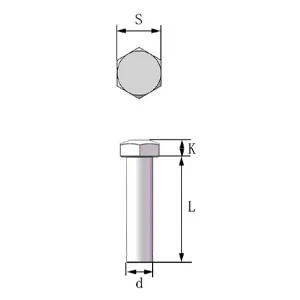
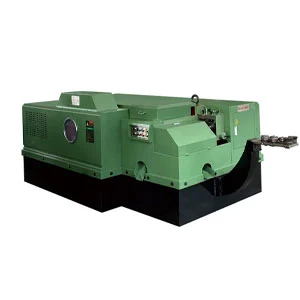
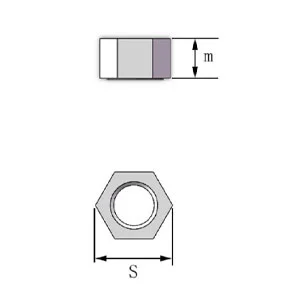 Bolt Cold Heading MachineThe bolt cold heading machine can meet various bolt requirements. It can produce cold-headed bolts with a head width across flats (S) of 9-58mm, a tail diameter (d) of 6-38mm, and a total length (S+L) of 6-500mm, at a production speed of 50-300 pieces per minute.
 Parts FormerParts former can meet the requirements for various non-ferrous metal products suitable for cold heading. The maximum outer diameter (S) of the products can reach 8-70mm, and the length (H) can reach 8-500mm, with a production speed of 50-300 pieces per minute.
(1).webp "Parts Former")

 English