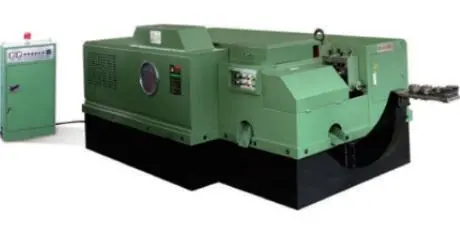
A bolt may appear to be a simple metal component, but its performance depends on thousands of precise forming operations completed during manufacturing. Behind every reliable fastener is a highly controlled production process where material flow, forming pressure, timing, and dimensional accuracy must work together.
As industries continue to demand stronger and more reliable fastening solutions, manufacturers are paying increasing attention to the accuracy of cold forming equipment. Customers are no longer focused only on production volume; they also expect bolts with tighter tolerances, consistent dimensions, and dependable performance under demanding operating conditions.
The quality of cold heading bolts begins with the machine used to produce them. From wire feeding and cutting to multi-stage forming and final shaping, every movement of the equipment affects the finished fastener. A high-accuracy bolt cold heading machine helps manufacturers achieve stable production, reduce material waste, and maintain consistent product quality over long manufacturing cycles.
This article explains how machine accuracy influences bolt quality, which factors determine cold heading precision, and how manufacturers can select the right equipment for their production requirements.
The Role of Accuracy in Bolt Cold Heading Machine Performance and Fastener Quality
Accuracy is one of the most important factors affecting cold heading performance because the process depends on precise metal deformation rather than material removal. During cold heading, metal wire is compressed and reshaped into the required bolt form. Any inconsistency in machine movement or forming pressure can influence the final product dimensions.
A reliable bolt cold heading machine maintains stable operating conditions throughout every production cycle. This allows manufacturers to produce large quantities of fasteners with consistent head dimensions, accurate lengths, and reliable mechanical properties.
For industries such as automotive manufacturing, construction equipment, industrial machinery, and general engineering applications, dimensional accuracy is essential. Even small variations in bolt geometry may affect assembly performance, connection strength, and long-term reliability.
When equipment accuracy is insufficient, manufacturers may experience problems such as uneven bolt heads, inconsistent material distribution, increased tooling wear, and higher rejection rates. Therefore, evaluating machine precision should be a key step before investing in cold heading equipment.
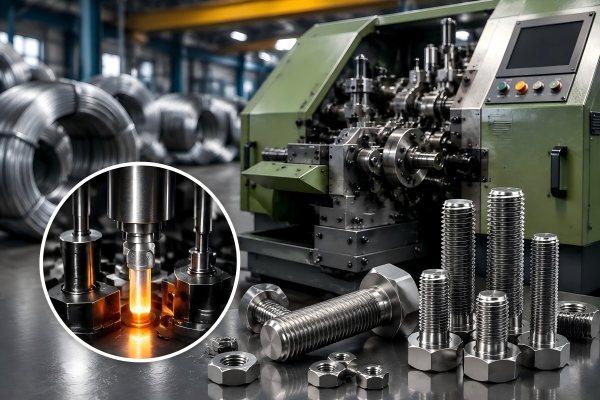
Key Factors That Determine Bolt Cold Heading Machine Accuracy and Precision
The accuracy of a bolt cold heading machine is determined by multiple factors working together. Mechanical structure, forming tools, feeding systems, transmission performance, and control technology all influence the stability and repeatability of the production process.
The machine frame is the foundation of accurate forming. Since cold heading generates extremely high forming forces, the equipment must maintain sufficient rigidity to prevent vibration and deformation. A strong structure helps keep forming components properly aligned, improving dimensional consistency during continuous operation.
Tooling accuracy is another critical factor. Dies and punches directly control the shape and size of the finished bolt. High-quality tooling ensures better material flow, consistent bolt head formation, and improved surface quality. For manufacturers producing large quantities of cold heading bolts, precise tooling plays an important role in maintaining production stability.
The feeding system also has a direct influence on final product quality. Accurate wire feeding ensures that each section of raw material enters the forming area at the correct position and length. Stable feeding reduces dimensional variations and minimizes unnecessary material consumption.
In addition, the transmission system and control technology affect how accurately different machine actions work together. Cold heading requires multiple forming stages to occur within exact timing sequences. Smooth mechanical movement and effective monitoring systems help maintain consistent performance while reducing production interruptions.
Critical Machine Components That Impact Bolt Quality and Production Consistency
A high-performance bolt cold heading machine is not defined by a single component. Instead, the overall production result depends on how effectively all major systems operate together.
| Machine Component | Main Function | Impact on Bolt Quality |
|---|
| Machine Frame | Supports forming operations and absorbs production forces | Improves stability and maintains dimensional accuracy |
| Heading Dies | Controls bolt shape and material flow | Ensures consistent head dimensions and appearance |
| Punch System | Applies forming pressure during production | Affects strength, precision, and surface quality |
| Feeding System | Positions wire material accurately | Improves repeatability and reduces waste |
| Transmission System | Controls movement timing between components | Maintains smooth and stable production |
| Control System | Monitors and manages operating parameters | Helps reduce defects and improve efficiency |
When selecting equipment, manufacturers should evaluate the complete machine system instead of focusing only on production speed. A machine with balanced structural strength, precision control, and reliable operation can provide better long-term production value.
Benefits of High-Precision Cold Heading for Efficient Bolt Manufacturing
Investing in a high-accuracy bolt cold heading machine provides advantages beyond improving product appearance. Precision forming directly influences manufacturing efficiency, material utilization, and overall production reliability.
One major benefit is improved fastener consistency. Accurate forming parameters allow every bolt to maintain similar dimensions and mechanical characteristics, which is especially important for industries requiring high-volume production and reliable assembly performance.
High-precision cold heading also helps reduce material waste. Compared with traditional machining methods, cold heading already offers excellent material utilization because the process forms metal without removing large amounts of material. Improved machine accuracy further reduces defective products and unnecessary adjustments.
Production efficiency is another important advantage. Stable equipment operation allows manufacturers to maintain continuous production with fewer interruptions. Reduced downtime and fewer quality issues help improve overall manufacturing productivity.
In addition, accurate cold forming contributes to the performance of cold heading bolts. The cold forming process can improve metal grain flow and enhance fastener strength when combined with properly controlled production conditions.
Selecting equipment that matches specific production requirements is an important step in achieving these benefits. Manufacturers can review different cold heading equipment options from Boyu Cold Header’s product range to better understand available machine configurations and forming capabilities for different fastener applications.
How to Select a High-Accuracy Bolt Cold Heading Machine for Your Application
Choosing the right bolt cold heading machine requires a clear understanding of production requirements, fastener specifications, and long-term manufacturing goals. The ideal equipment should match the required bolt sizes, material characteristics, output capacity, and accuracy expectations.
| Selection Factor | Basic Equipment | High-Accuracy Cold Heading Machine |
|---|
| Precision Control | Suitable for standard fastener production | Provides stable and repeatable forming accuracy |
| Production Stability | May require more frequent adjustments | Supports continuous industrial operation |
| Product Quality | Meets general production requirements | Improves dimensional consistency |
| Efficiency | Higher possibility of material loss and downtime | Reduces defects and improves productivity |
| Long-Term Value | Lower initial equipment investment | Provides better lifecycle performance |
Before purchasing equipment, manufacturers should consider factors including bolt diameter range, production speed, forming stages, tooling compatibility, maintenance requirements, and supplier technical support.
Because every production environment has different requirements, professional guidance can help manufacturers choose a machine configuration that fits their actual applications. For questions regarding equipment selection, application requirements, or production planning, manufacturers can contact Boyu Cold Header’s technical team for further discussion.
Conclusion
The accuracy of a bolt cold heading machine directly influences fastener quality, manufacturing efficiency, and production reliability. From machine rigidity and tooling precision to feeding accuracy and automated control, every element contributes to the final performance of cold heading bolts.
For manufacturers looking to improve consistency, reduce waste, and meet increasingly demanding fastener requirements, selecting high-precision cold heading equipment is an important investment. Understanding the factors that influence accuracy allows companies to make better equipment decisions and establish a more stable production process.
FAQ
1. What is a bolt cold heading machine?
A bolt cold heading machine is industrial equipment that forms metal wire into bolts through cold forming technology. It is widely used for high-volume fastener production because it provides efficient material utilization and consistent output.
2. Why is accuracy important for cold heading bolts?
Accuracy ensures that bolts maintain consistent dimensions, proper material distribution, and reliable mechanical performance, which helps improve final assembly quality.
3. What factors affect bolt cold heading machine accuracy?
Machine rigidity, tooling precision, wire feeding accuracy, transmission stability, and control systems all influence the precision and consistency of cold heading production.
4. How does high-precision cold heading improve manufacturing efficiency?
High-precision equipment reduces production defects, minimizes material waste, improves stability, and helps manufacturers maintain continuous operation.
5. Can a bolt cold heading machine produce large quantities of fasteners?
Yes. Industrial cold heading machines are designed for mass production while maintaining consistent product quality and dimensional accuracy.
6. How should manufacturers choose a bolt cold heading machine?
Manufacturers should evaluate bolt specifications, production volume, material type, required accuracy, machine capability, and supplier support before making a decision.

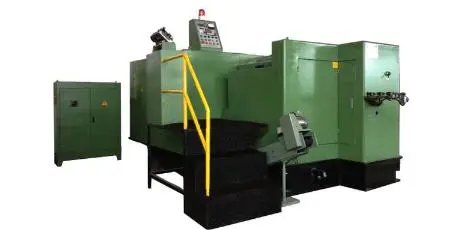
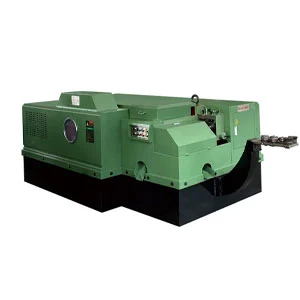
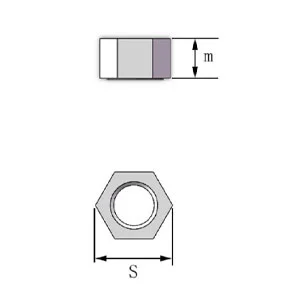 Bolt Cold Heading MachineThe bolt cold heading machine can meet various bolt requirements. It can produce cold-headed bolts with a head width across flats (S) of 9-58mm, a tail diameter (d) of 6-38mm, and a total length (S+L) of 6-500mm, at a production speed of 50-300 pieces per minute.
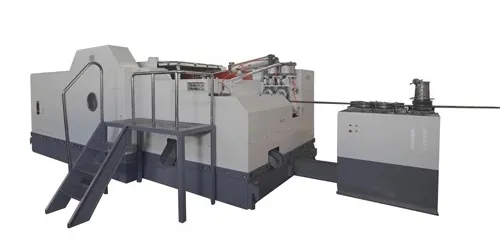
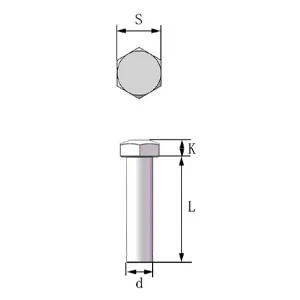 Parts FormerParts former can meet the requirements for various non-ferrous metal products suitable for cold heading. The maximum outer diameter (S) of the products can reach 8-70mm, and the length (H) can reach 8-500mm, with a production speed of 50-300 pieces per minute.
(1).webp "Parts Former")

 English